TL;DR
- Shopify is positioning as an agentic commerce platform, agents discover and buy from merchant catalogs.
- US playbooks assume one dominant chat surface. APAC runs WeChat, LINE, Grab, and owned site in parallel.
- Headless or tight Online Store 2.0 + API discipline beats bolting agents onto messy catalog data.
Who this is for
Anyone operating cross-border or multi-app commerce in APAC: brand e-commerce leads, agency program owners, and founders selling on Shopify while customers live in super-apps.
What Shopify is selling
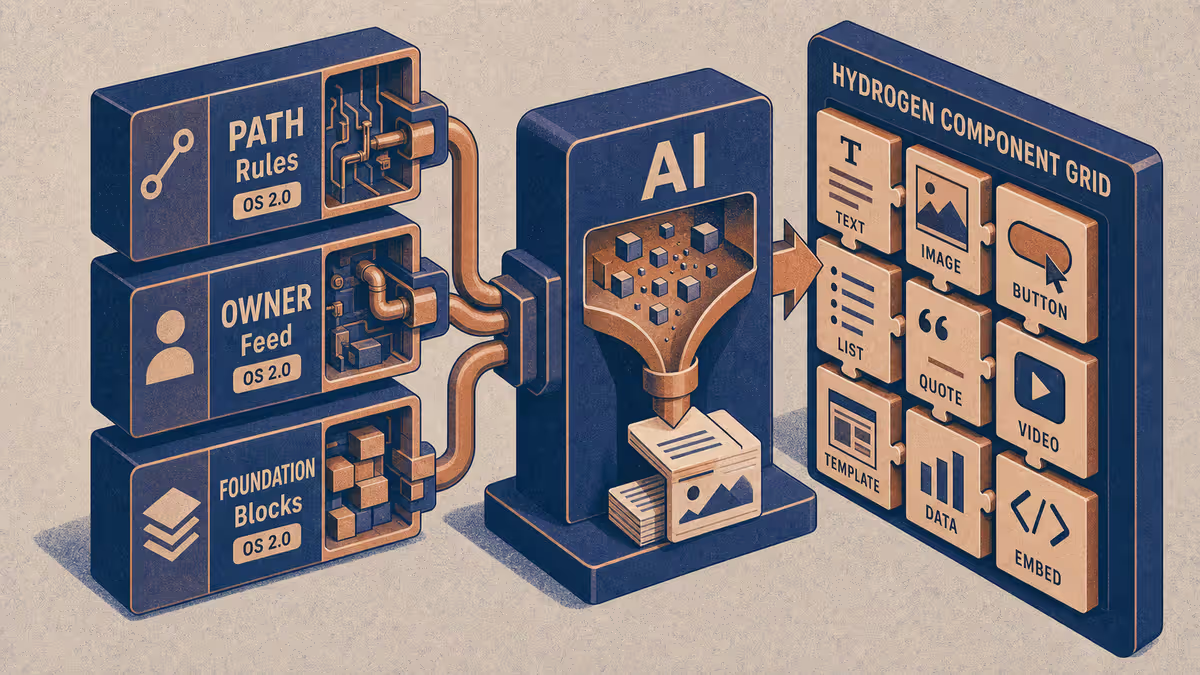
 Photo: Petralian (2026)
Shopify's 2026 narrative connects merchant catalogs to AI conversations, agents query product data, surface items, and route checkout. That is structurally different from "put a chat widget on the storefront."
The operator win is catalog as API: one truth layer agents and humans both read.
The APAC gap is channel count. Instagram Shop and ChatGPT checkout headlines are real, but Hong Kong and GBA merchants still live inside WeChat Mini Programs and LINE shopping habits I compared in WeChat Mini Programs vs Instagram Shop.
APAC channel map (one catalog, many mouths)
Diagram: Petralian (2026).
| Surface | Role | Agent risk if catalog is stale |
|---|---|---|
| Shopify Online Store | Owned conversion, SEO, email capture | Wrong price in agent answer |
| WeChat Mini Program | Social graph, wallet, member ID | Duplicate SKU rows |
| LINE | Japan/Thailand messaging commerce | Manual CSV drift |
| Grab / regional super-apps | Delivery-led checkout | API timeout → agent hallucination |
Rule: agents reflect catalog hygiene. They rarely fix stale data on their own.
MACH for agentic commerce (compose with what you already run)
Agentic commerce fails when teams treat AI as a new monolith beside the old one. It works when AI is headless cognition over systems already in production:
| MACH | APAC agentic commerce |
|---|---|
| Microservices | One catalog read service, separate checkout / wallet adapters per channel (Shopify, WeChat, LINE) |
| API-first | Agents and humans pull the same Shopify Admin / Storefront API fields, no shadow spreadsheet |
| Cloud-native | Inference and workers where you already host (Shopify, edge Workers, your VPS), not a second duplicate catalog cloud |
| Headless | Mini Programs and ChatGPT discovery are channels; Shopify (or your PIM) stays product SSOT |
This is the same instinct as Shopify Hydrogen vs Online Store: AI increases the payoff for clean API boundaries, not for skipping them.
Three workflows that work in HK cross-border
- Catalog SSOT in Shopify, Markets, duties, and FX via Shopify Markets where possible
- Mini Program reads same API, no parallel spreadsheet maintained by intern
- Agent layer reads structured fields, title, variant, inventory, policy text in files or API, not prose-only pages
Hydrogen vs theme tradeoffs sit in Shopify Hydrogen vs Online Store When AI Is the Front End. Agentic commerce pushes you toward headless or strict theme contracts faster than a lifestyle brand expected five years ago.
What OpenAI and Meta moves mean for APAC
Digest week news (OpenAI refocusing ChatGPT on discovery, Meta pushing checkout experiments) does not replace super-app checkout in APAC. It changes upper-funnel discovery for brands that already own data.
Program owners should split metrics:
- Discovery, agent or feed impressions, qualified clicks
- Owned conversion, site or Mini Program checkout you control
- Platform conversion, fees, data access, refund rules
Example, how I would stage a pilot
Week 1: audit SKU count, duplicate titles, missing variant metadata
Week 2: fix catalog in Shopify admin (no agent yet)
Week 3: one agent surface (e.g. internal sales copilot on catalog API)
Week 4: one external surface (Mini Program or ChatGPT catalog integration if merchant qualifies)
Skipping weeks 1 and 2 often means agents recommend variants that do not match Shopify admin data.
Path A
Export 20 top SKUs. Ask any chat tool to recommend a bundle for a Hong Kong customer. If answers disagree with your admin, fix data before you fix prompts.
Limitations
Shopify product names and partner APIs change with vendor releases. WeChat, LINE, and Grab integrations vary by merchant tier and region. Treat the pilot steps as a pattern, not a guarantee your stack qualifies for every channel.
FAQ
Do I need Hydrogen for agentic commerce?
Not always. You need consistent structured catalog data. Hydrogen helps when AI generates UI; strict Online Store 2.0 plus APIs can suffice for smaller catalogs.
Will Shopify's agentic layer replace WeChat?
No in APAC near term. It competes for discovery budget, not wallet dominance.
ChatGPT checkout extra fees?
Press reports merchants may pay additional fees on some AI checkout paths. Model that in margin before you automate.
One agent for all channels?
Start internal then one external channel. Multi-agent without SSOT catalog multiplies errors.
Relation to CDP?
Catalog SSOT is prerequisite. CDP identity layer comes second. See The CDP Your Agents Need Is a Folder Contract for a lighter pattern.
Weekly email with new posts on enterprise AI and how teams ship it.
One email per week. Unsubscribe anytime.