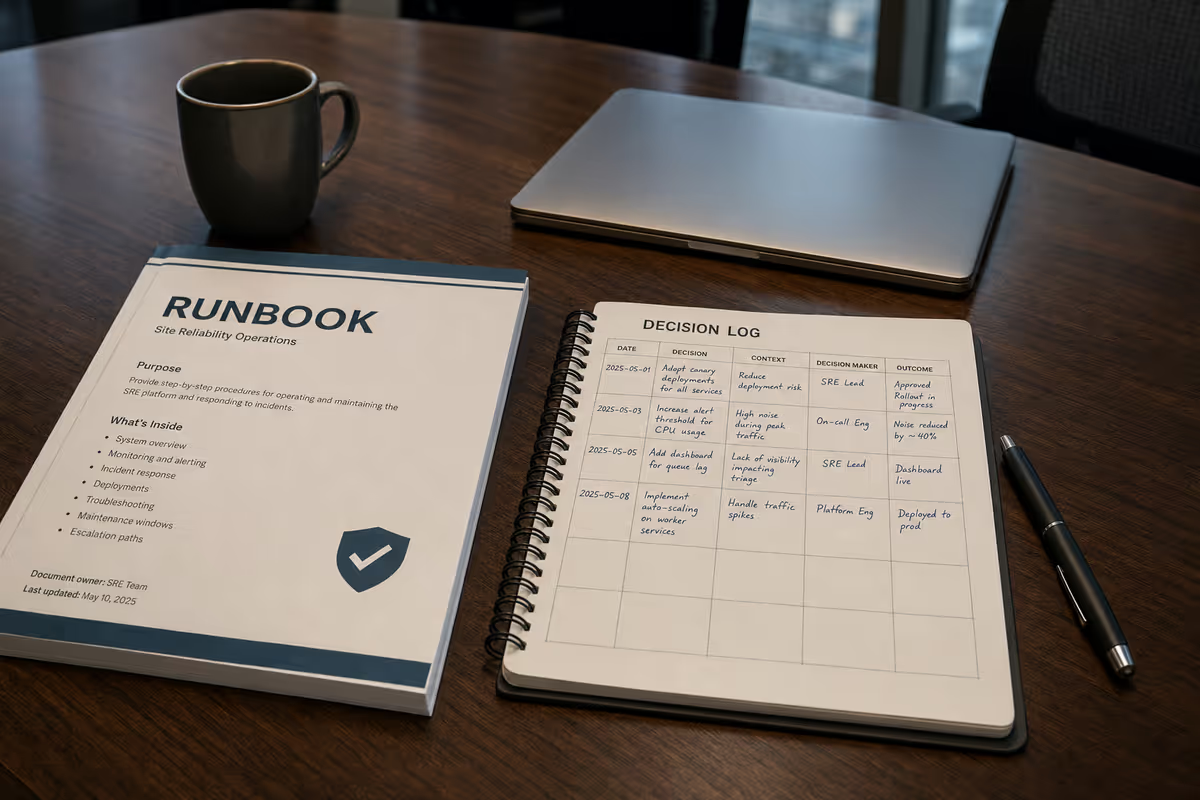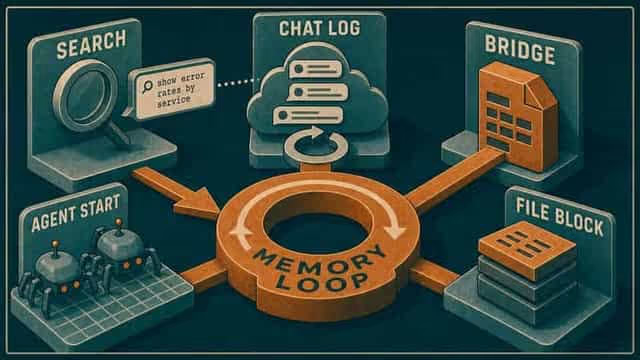
TL;DR
- Transformation fails when strategy lives in decks and execution lives in disposable chat; repo plus Bridge aligns weekly work to stated intent.
- Agents accelerate delivery inside guardrails; they do not replace phase gates, RACI, or the humans who sign commitments.
What digital transformation looks like as delivery mechanics
Digital transformation at program scale is delivery mechanics: a durable repo (or equivalent file store), agents that read the same handoff files every session, and a Bridge note that states current intent so work survives sponsor changes, vendor churn, and model upgrades.
Who it is for: transformation leads, CIOs, and program directors who must show progress beyond workshops without reducing the program to "everyone gets ChatGPT Enterprise."
What you will learn: how repo + agents + Bridge map to phase gates you already run, what stays in Jira vs Bridge, and Path A for one initiative without a full platform buy.
Pair with: [[three-file-minimum-for-any-agent-project]] for the minimum file set before adding rules or MCP. This post is executive delivery mechanics; three-file is the week-one bootstrap.
 Photo: Peter Dyllong on Pexels — Petralian (2026)
Why transformation theater persists
Most transformation programs produce artifacts audiences recognize: roadmaps, capability maps, town halls, pilot logos. Fewer produce traceable weekly deltas tied to a single source of intent.
When delivery teams open fresh chat tabs per sprint, you get motion without memory. When vendors rotate, the oral history leaves with them. When leadership asks "what changed since March," someone exports slides instead of diffs.
That gap is structural. It is not fixed by a larger LLM license. It is fixed by files that survive people, plus agents trained to read them first.
Retail and banking comparisons often praise retail speed (retail vs banking innovation). The lesson for transformation is operational: retail ships frequent, visible changes because systems and teams align on inventory and shelf truth. Transformation programs need an equivalent execution truth layer. Bridge plus repo is one pattern.
The three delivery objects
Screenshot: Bridge file beside repo history — Petralian (2026)
1. Repo (system of record for change)
A repo is not only for software. It is where diffs live: policies, integration configs, runbooks, IaC, content pipelines, evaluation scripts. If transformation touchpoints digital products, the repo holds what shipped.
Agents without a repo still generate text. Agents with a repo can propose changes humans review and merge. That is the difference between rehearsal and delivery.
2. Bridge (system of record for intent)
Bridge vs transcript search established the split: search finds what was said; Bridge holds what still matters. At transformation scale, Bridge is the weekly SteerCo sentence expanded into three bullets: priority, blockers, next.
Jira holds backlog granularity. Bridge holds why this sprint matters to the program narrative. Confuse them and executives read tickets instead of outcomes.
3. Agents (acceleration inside guardrails)
Agents draft specs, migration checklists, test plans, and comms. They do not pass phase gates. Leadership governance keeps Accountable on humans; agents stay in Responsible or Consulted.
The Knowledge Work Engine adds routing, footers, and optional batch workers. Transformation programs can start with a three-file minimum (Bridge, open loops, known gotchas) before that full stack, using the same discipline as deliberate file memory.
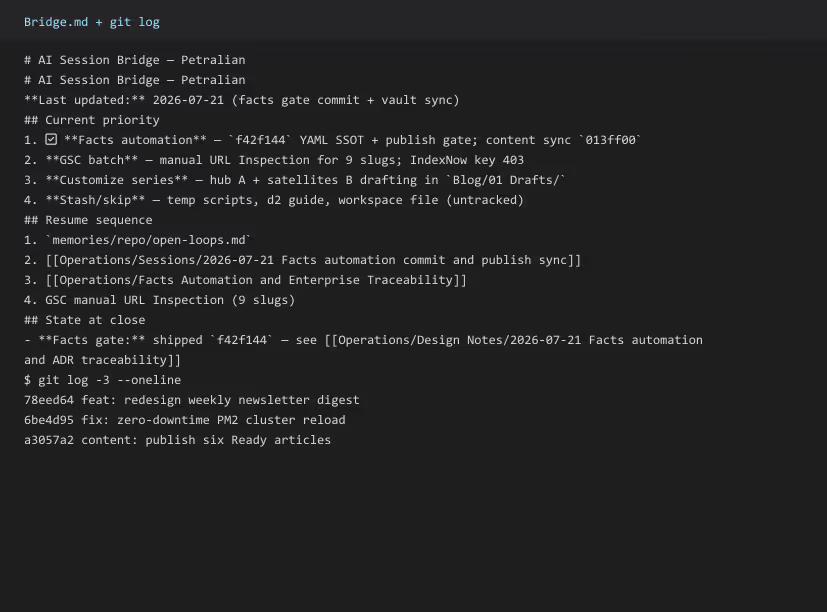 Screenshot: Petralian / Obsidian Session Bridge (2026)
How this maps to familiar program frames
| Familiar frame | Delivery mechanic |
|---|---|
| Phase gate | Bridge section "gate evidence" + repo tag |
| OKR | Bridge priority line linked to metric owner |
| RAID log | open-loops.md + RAID note |
| Architecture decision | Decisions/YYYY-MM-DD topic.md in repo |
| Vendor SOW | Repo folder + Bridge vendor row |
You are not replacing PMI or SAFe. You are giving agents the same artifacts program managers already owe leadership.
What good looks like at week eight
 Photo: Mike van Schoonderwalt on Pexels — Petralian (2026)
A sponsor should be able to open Bridge and repo history and answer:
| Question | Evidence |
|---|---|
| What did we commit in March? | Decision file + gate slide |
| What shipped last week? | Merged PR or config change |
| What blocked us? | Bridge blockers with owner |
| What is next? | Bridge next list |
| What did agents touch? | Session summaries or PR authors |
If those answers require a workshop, the program is still theater.
Example implementation: how I run multi-workspace delivery
I run the same shape across public repos (Petralian personal site, Vouch Shopify app, open-source tools) and confidential engagements: Bridge in the vault or Operations/, repo for anything that must diff, agents under Cursor rules with verify loops. I direct agents to implement; I read diffs and accept merges.
Transformation language in steering meetings maps to those mechanics. "Pilot" means a repo branch and a Bridge priority, not a slide labeled pilot.
Published writing stays generic for client work. The pattern is portable; employer and client names are not.
Path A: one initiative without buying a platform
- Create a shared folder or lightweight git repo for one transformation workstream.
- Add
Bridge.mdwith Priority, Blockers, Next. - Add
charter.mdwith three OKRs and explicit out-of-scope lines. - Run two weekly sessions with any AI tool: paste Bridge + charter first; end by updating Bridge only.
- At week two, show leadership Bridge diffs, not a new deck.
If Bridge never updates, fix cadence before you scale agents.
Limitations
Repos exclude teams that cannot use git. A governed SharePoint or wiki with version history can substitute if diffs are visible.
Agents increase throughput on poorly scoped programs faster than good ones. Charter and out-of-scope lines are mandatory.
Regulated environments need separation of duties on merges. Bridge does not replace SOX controls.
FAQ
What does digital transformation mean in an agentic era?
Less slideware, more repo truth: files agents can read, gates they cannot bypass, and Bridge priorities leadership actually updates.
Why is a Bridge file part of transformation?
It converts strategy into session-readable intent so agents and vendors do not rebuild the wrong thing each week.
Do I need new software to start?
No. Start with git, markdown ops files, and one parametric YAML before buying another platform layer.
What to do next
Pick the transformation workstream with the noisiest status meetings. Move intent to Bridge and evidence to a repo this month. Train sponsors to ask for Bridge diffs in SteerCo. Add agent rules only after three deliberate memory files prove close-out discipline. See why file memory beats hoping agents remember.
Read Part 0: Knowledge Work Engine when you are ready to add routing across marketing, delivery, and leadership modes in the same program.
Weekly email with new posts on enterprise AI and how teams ship it.
One email per week. Unsubscribe anytime.